
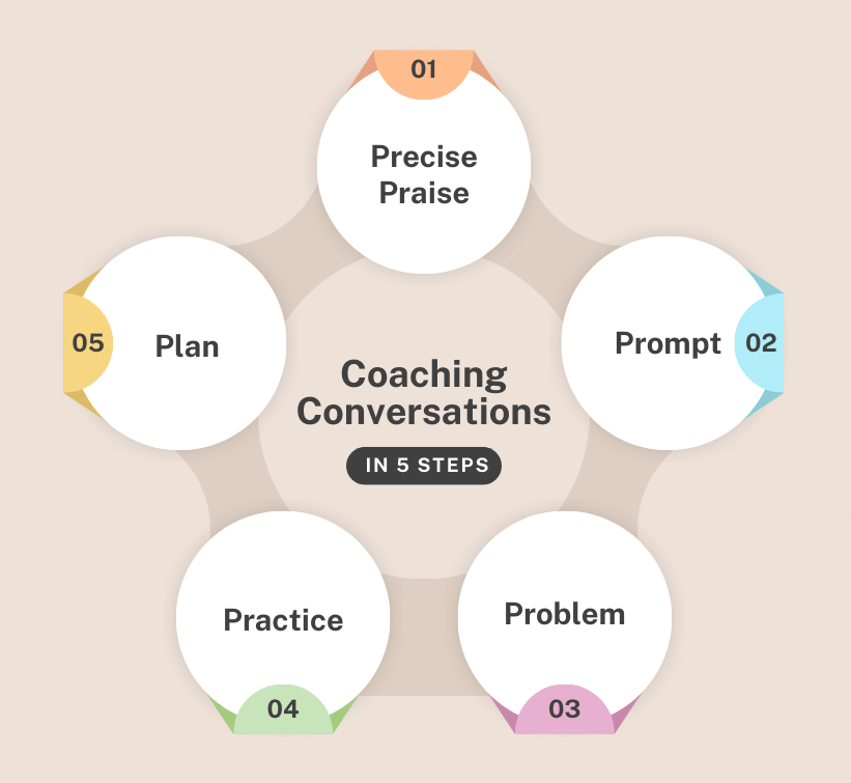
All too often in the past I have received feedback from an observation where the EBI was to improve questioning. But what part of questioning should I look at in more detail? What does effective questioning look like? What changes I can I take into my next lesson that will make a difference to my students?
When I had my first coaching session, I was given the incremental step: Use a students name after posing a question to increase participation ratio of all students. We discussed the reasons why this step will improve student focus and instantly I started to reflect on my practice and I put it straight into action in my next lesson. Effective action steps are crucial for ensuring that coaching leads to meaningful change to our practice.
How do you choose an effective action step to solve the problem you observe?
- Align Action Steps with Learning Goals – Effective action steps should directly align with the teacher’s learning goals and the needs of students. To ensure that it aligns, begin with the outcome that you wish to achieve. Looking at example from earlier, my goal was it increase participation ratio, ensuring all students are thinking during my questioning. To achieve this placing the name at the end of my question ensured that all students were thinking, and preparing to answer, not just the student that I had selected.
- Make action Steps Specific and Measurable – Vague or action steps that are too broad can lead to confusion and then the teacher will be unable to effectively implement and use the action step in their teaching. Action steps should be specific and outline exactly what the teacher will do and how they will be able to measure their success. Rather than saying ” Ensure there is pace to your lesson”, an effective action step might be ” Narrate timings as the timer runs down during independent practice”.
- Consider the Teachers Current Practice and Context – It is especially important that the next step can fit in with the teachers current practices and mental models. Action steps can be new techniques and offer challenge however they must be realistic to the context. This will ensure that the teacher feels comfortable and confident to action the step next lesson. In my experience teachers will not action a strategy that they can not fully engage or believe as having an impact to their students.
- Focus on One Action Step at a Time – Trying to tackle multiple action steps at once can overwhelm teachers and will not allow them to rehearse and practice until they are comfortable. Focusing on one action step will also lead to deeper reflection and refinement during deliberate practice.
- Establish a Timeline for Reflection and Review – Teachers life is busy and unless there is a timeline for implementation and chance for reflection it will soon move to the bottom of a teachers priority list. A 2/3 week timeframe is suitable to allow teachers to action their step on multiple occasions before you discuss progress and celebrate success. Instructional coaching is most successful when it is integrated within whole school CPD so that teachers time is ring-fenced and protected. It also ensures that momentum of action-reflection is maintained leading to greater success.
Choosing effective action steps in instructional coaching requires careful consideration and collaboration. Teachers should be guided towards their action step, the coach carefully prompting deeper conversations so that the teacher connects the action point to existing mental models. The goal of successful instructional coaching is not just facilitating a change in our practice but to create a culture of continuous improvement and growth within our teaching practice.



 Teachers Notebook
Leave a comment