
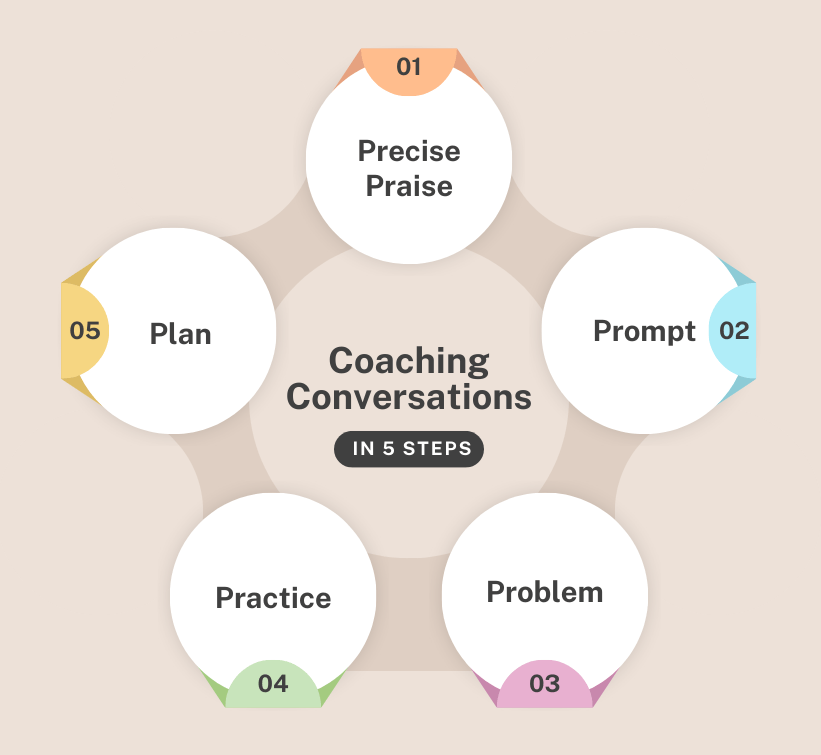
Too often lesson feedback concentrates on the Even Better If, the action step of improvement, however precise praise is just as valuable to a teacher’s development than the improvement area that you discuss. Think back to your own experience of lesson feedback. The most effective feedback that you received most likely motivated you to improve and thrive. That motivation comes from a sense of celebration that you succeeded but can also make adjustments to improve further.
Precise praise is a valuable feedback strategy that is often discussed in classroom behaviour management. A method that teachers can use to maximise focus and reinforce expected actions of students. A positive reinforcement tool to maximise learning and build stronger relationships between teachers and students. So why don’t we apply this when we want to develop our teachers?
Recently when I was developing training sessions for our school instructional coaches I considered where should I start? Naturally I knew I wanted to discuss how we identify a granular action step and how to probe teacher paedology, but I wanted to begin with the most important part of an instructional coaching conversation – Precise praise. Praise of a powerful took in education but is often-overlooked area within lesson feedback but this element sets the scene for how the teacher will engage in the feedback
There are 4 main elements of precise praise:
- Specific – What you discuss needs to be evidenced and observable. What teaching strategy did the teacher use that had a positive impact on student attainment? If you have a school common language around teaching techniques use it. For example, “You circulated with purpose allowing you to support where necessary”.
- Aligned – Relate the aspect of praise to a previously mastered action step. This allows the teacher to recognise the journey that they are on. It builds the bigger picture of development.
- Relevant – What impact will it have on students? Look and discuss the response of students to the teaching strategy. Point out where this is seen.
- Authentic – Don’t make stuff up. Effective teacher feedback is built on genuine professional relationships. If the start doesn’t include the truth the teacher will not feel that the action step to be discussed is authentic either.
Let’s compare 3 praise statements:
” Your explanation was really clear”
“The way you explained active transport was really clear”
“The way you explained active transport using the diagram to narrate your thinking made a difficult concept really clear to students”
The first statement is positive however it lacks specifics, what part of the teacher explanation was impactful? The second whilst contained a specific part to the lesson that is observable, where is the relevance? Where in the praise can a teacher understand what part of the explanation has an impact on student understanding? The third praise statement is precise to a specific point in the teachers’ actions that made a positive impact. It contains elements of school/academy common language of teaching and learning strategies. This allows the teacher to think back to PD sessions around this strategy and instantly reflect. The final statement also enables the coach to lead the teacher into a probe discussion around the impact of that action on pupils and allows the observer to assess the teachers understanding of the ‘science of learning’ before moving onto discussions of action steps. “How does narrating your thinking prepare students to explain concepts later in the lesson?” This praise is a well thought out opening to coaching conversations then can naturally flow into modelling and discussions of the action step and the teacher is onboard, confident to be involved within the developmental discussions to come.
Precise praise strikes a balance between affirmation and accountability. It sets clear expectations and standards that you want to build within the culture of the school. By implementing precise praise alongside concreate actionable feedback it can become the catalyst for a positive culture within teacher professional development. Effective praise will spotlight high-leverage teacher actions so that teachers build confidence in repeating them consistently. Plain and simple, praise is coaching.
The power of precise praise should not be underestimated in the area of teacher development. We not only celebrate teachers’ successes but also pave the way for meaningful growth and continuing professional development which will ultimately lead to improved student outcomes. After all, when teachers thrive, students succeed.



 Teachers Notebook
Leave a comment